
Social Stories
Our June Book Club Meeting focused on the topic of Social Stories. Carol Grey, who is the founder of such stories, started writing them for her students with Autism Spectrum Disorder (ASD), so they could better understand the message she was trying to convey.
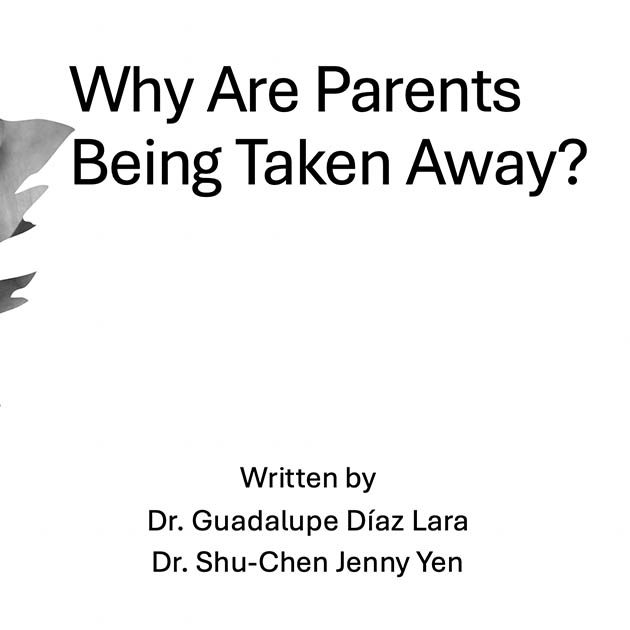
Basically, the concept of a social story is a short, descriptive written narrative that explains a social situation, concept, or behavior to help children in navigating social interactions, events and/or new experiences. Dr. Shu-Chen Jenny Yen wrote one on the current events of deportation and ICE. See her story below and please share with loved ones.
Several social stories were shared, as well as some great books that can function in the same way. Monica shared the following books:
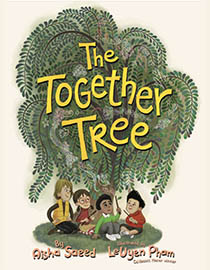
- The Together Tree opens in a new tab — written by a mother about her son who had a difficult time adapting to Kindergarten. He gets teased and bullied in the classroom; this being a turning point, where other children reach out to him about what he was interested in doing by himself. In the end, they all get along – hence, the together tree.
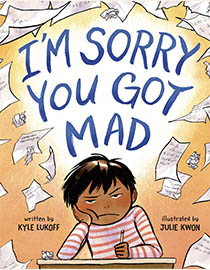
- I’m Sorry You Got Mad opens in a new tab — another book shared by Monica, about saying sorry, written in short narratives. Great illustrations, and words written on notes throughout the book.
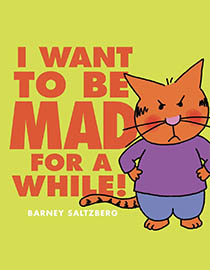
- I Want to be Mad for a While opens in a new tab — it’s ok to sit with your anger for a while.
Why Are Parents Being Taken Away?
A Social Story on Deportation and ICE
Written by Dr. Guadalupe Díaz Lara and Dr. Shu-Chen Jenny Yen
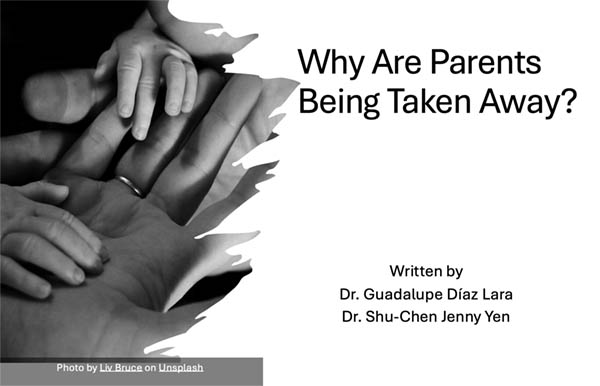
Available in English opens in a new tab and Spanish opens in a new tab
When deportation happens, many children from immigrant families feel scared and worried that their parents might be taken away by ICE. Adults can help by reassuring them about their safety, answering children’s questions, and validating their feelings.
This book is for parents, caregivers, guardians, and educators to help children ages 3-8 understand the deportation and immigration process in the U.S. Its goal is to reassure children that their parents will not be taken away by ICE. For younger children, especially those age 3-4, some vocabulary may be difficult, but using simpler terms, like ‘passes,’ can help them better understand and connect with the situation.
The book also encourages children to show empathy for others whose parents may have been taken away and, most importantly, reminds them of their parents’ unconditional love.
